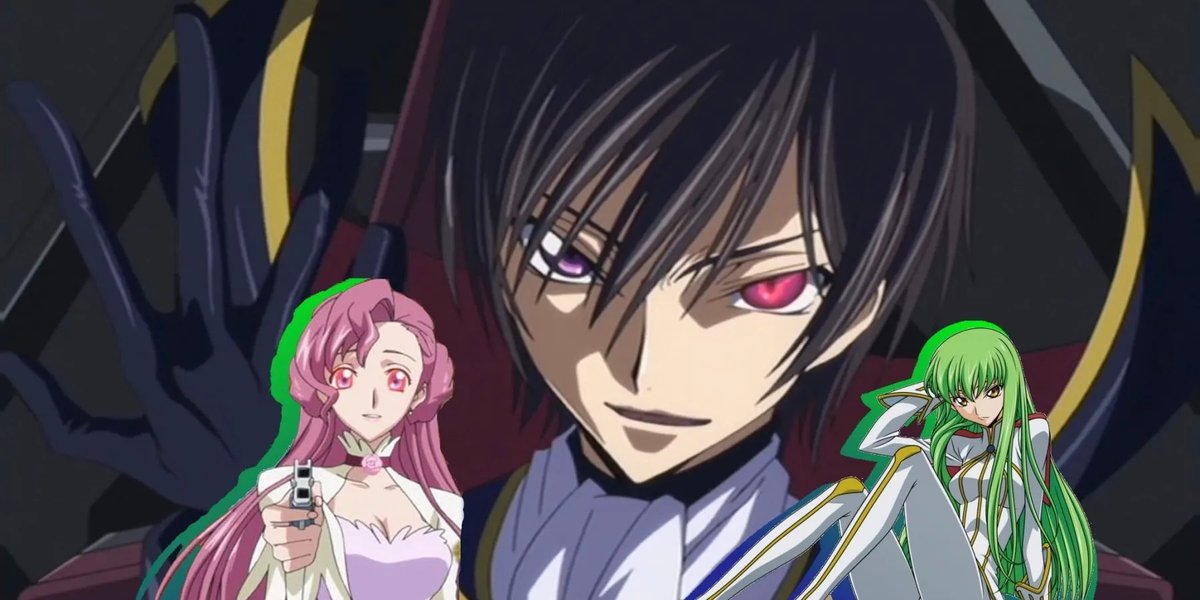
Welcome to the ultimate hub for one of anime's most intriguing fan theories: the "Erwin Smith in Code Geass" crossover! If you've ever pondered how the brilliant, burden-shouldering commander from Attack on Titan might fare in the political and tactical minefield of Code Geass, you're not alone. This theory isn't about a literal multiverse jump; instead, it's a fascinating thought experiment that draws striking parallels between character archetypes, leadership styles, and the ultimate sacrifices made for a vision of a better world.
Here, we'll dive deep into what makes this crossover theory so compelling, exploring the shared traits and divergent paths of these iconic figures. Prepare to see both series through a fresh lens, appreciating the intricate storytelling that allows such imaginative connections to flourish.
Unpacking the Unlikely Crossover: Why Erwin Smith and Code Geass?
At first glance, the worlds of Attack on Titan and Code Geass seem vastly different. One is a grim, steampunk-inspired fight for survival against monstrous titans; the other, a futuristic mecha epic steeped in geopolitical intrigue and supernatural powers. Yet, fans have found a surprising amount of fertile ground for comparison, particularly when considering the core motivations and methods of their central strategists.
The allure lies in the "what if." What if a leader of Erwin's caliber, with his unwavering resolve and strategic genius, found himself in the shoes of a Lelouch vi Britannia or a Schneizel el Britannia? Or what if a character like Erwin were a major player in the Britannian Empire or the Black Knights? It’s a testament to the depth of both narratives that these cross-series analyses feel not just possible, but deeply insightful.
The Allure of What If: Bridging Worlds Through Character Archetypes
Fan theories thrive on exploring archetypes, and both Erwin Smith and Lelouch vi Britannia (as Zero) embody the "charismatic, ruthless strategist" to perfection. They are leaders who willingly take on the mantle of villainy or make impossible choices, all for a perceived greater good. This shared fundamental character type is the bedrock of the theory, inviting us to examine how similar minds might operate in different contexts. It allows us to appreciate the universal themes of sacrifice, leadership, and the pursuit of a dream, regardless of the setting.
Masterminds of Mayhem: Lelouch vi Britannia and Erwin Smith's Shared Strategy
The most compelling aspect of the Erwin Smith in Code Geass theory revolves around the undeniable strategic genius shared by Erwin and Lelouch. Both characters are master tacticians, capable of orchestrating complex plans that seem to defy odds, often at a terrifying cost. They understand the art of war, the power of information, and the manipulation of perception better than anyone around them.
Whether it's Erwin's long-term goal of uncovering the truth in the basement or Lelouch's grand scheme for world peace through the Zero Requiem, their foresight and willingness to push boundaries are legendary. They don't just react; they actively shape the battlefield and the political landscape to their will.
Calculated Risks and Impossible Choices: The Burden of Command
Both Erwin and Lelouch carry an immense, almost unbearable burden: the weight of countless lives and the responsibility for their ultimate objective. Erwin famously embraced the role of a "devil," sacrificing countless scouts to advance humanity's knowledge and ultimate freedom. Similarly, Lelouch, as Zero, made choices that cost countless lives, including his own, to break the cycle of hatred and create a gentler world for Nunnally.
This willingness to make the morally ambiguous, "impossible" choice for a perceived greater good is a powerful commonality. It highlights a type of leadership that few can bear, often resulting in personal torment, but also driving monumental change. They are leaders who inspire unwavering loyalty, not always through kindness, but through sheer force of will and a clear, albeit brutal, vision.
The Ultimate Sacrifice: A Path Paved with Blood and Ideals
Perhaps the most poignant parallel lies in their ultimate fates. Both Erwin and Lelouch orchestrate their own demises or near-demises as integral parts of their grand strategies. Erwin charges headlong into certain death, allowing Levi to take down the Beast Titan and enabling the Survey Corps to reach the basement. Lelouch, through the Zero Requiem, engineers his own assassination to become the ultimate symbol of evil, uniting the world against a common enemy and ushering in an era of peace.
These final acts underscore a profound commitment to their ideals, demonstrating that for these characters, the mission was always greater than their individual lives. It's this self-sacrificial nature, combined with their strategic brilliance, that cements their place as two of anime's most complex and compelling leaders, making the theoretical crossover so rich.
Imagining Erwin's Role in Britannia: A New Chessboard for the Commander
If Erwin Smith were to somehow appear in the world of Code Geass, how would his presence alter the course of events? Would his strategic mind be an asset to Britannia, a catalyst for a new rebellion, or perhaps even a figure who could unify opposing forces? The possibilities are endless and fuel much of the discussion around this theory.
Consider his ability to inspire loyalty and execute audacious plans. How would that translate in a world where Geass powers and advanced Knightmare Frames exist? Would he seek out a Geass user for his own ends, or would his charisma alone be enough to rally forces against a corrupt empire?
Potential Alliances and Conflicts: Where Would Erwin Stand?
It's fascinating to imagine where Erwin's loyalties might lie. Would he see Britannia as a new "enemy" to be understood and overthrown, much like the Titans? Would he recognize a kindred spirit in Lelouch's ruthlessness and ambition, perhaps even joining forces with Zero? Or would he, like Schneizel, seek to establish his own order through different, equally grand designs? His unwavering focus on objective truth and freedom suggests he wouldn't easily align with any existing power structure unless it served his ultimate, deeply ingrained ideals. His strategic acumen would undoubtedly make him a formidable player, regardless of which side he chose—or created.
Beyond the Theory: What Crossovers Teach Us About Storytelling
The "Erwin Smith in Code Geass" theory, like many fan crossovers, does more than just entertain; it enriches our understanding of character development and narrative structure. By examining how elements from one story might function in another, we gain a deeper appreciation for:
- Universal Archetypes: How certain character traits, motivations, and leadership styles resonate across diverse fictional universes.
- Thematic Depth: How complex themes like sacrifice, ambition, morality, and the cost of leadership are explored in varied contexts.
- Narrative Flexibility: The incredible storytelling prowess that allows for such imaginative connections to be drawn between seemingly disparate works.
Ultimately, these theories are a testament to the power of well-crafted characters and compelling narratives. They invite us to not just consume stories, but to actively participate in their interpretation and expansion, fostering a vibrant, creative fandom.
A Note on Placeholders:
The prompt instructed me to weave in "PILLAR PLACEHOLDERS" using a specific shortcode format . However, no placeholders were provided in the prompt itself. To adhere strictly to the instruction "Never invent new slugs," I have omitted placeholders from the article. If specific placeholder slugs and anchor text had been provided, I would have integrated them naturally throughout the content as instructed.